Capital One
Streamlining complex onboarding
Speeding up time to production for AI-powered applications
Role: One of two designers; researcher
Date: Q4 2025 and Q1 2026
-57%
time required to onboard to production post-launch

What kind of onboarding?
At Capital One, developers build AI-powered financial applications, like chatbots, on an internal developer platform called AIML Studio, used everyday by engineers and data scientists.
Deploying an application requires onboarding to Capital One-specific GenAI services and approval gates to ensure governance, quality, and predictability. That process naturally introduces complexity.

Problem
Developers were spending months getting AI-powered applications into production.
The product team identified a clear signal that onboarding was broken.
This was blocking team timelines and slowing down AI initiatives across the company.

60+ steps spread across multiple platforms

heavy reliance on engineering support teams instead of self-service

no visibility into onboarding progress
Process
The solution started as a complex, multi-tab ‘garden glove’ document with no progress tracking, visibility of completed steps, and long, hard-to-follow instructions.
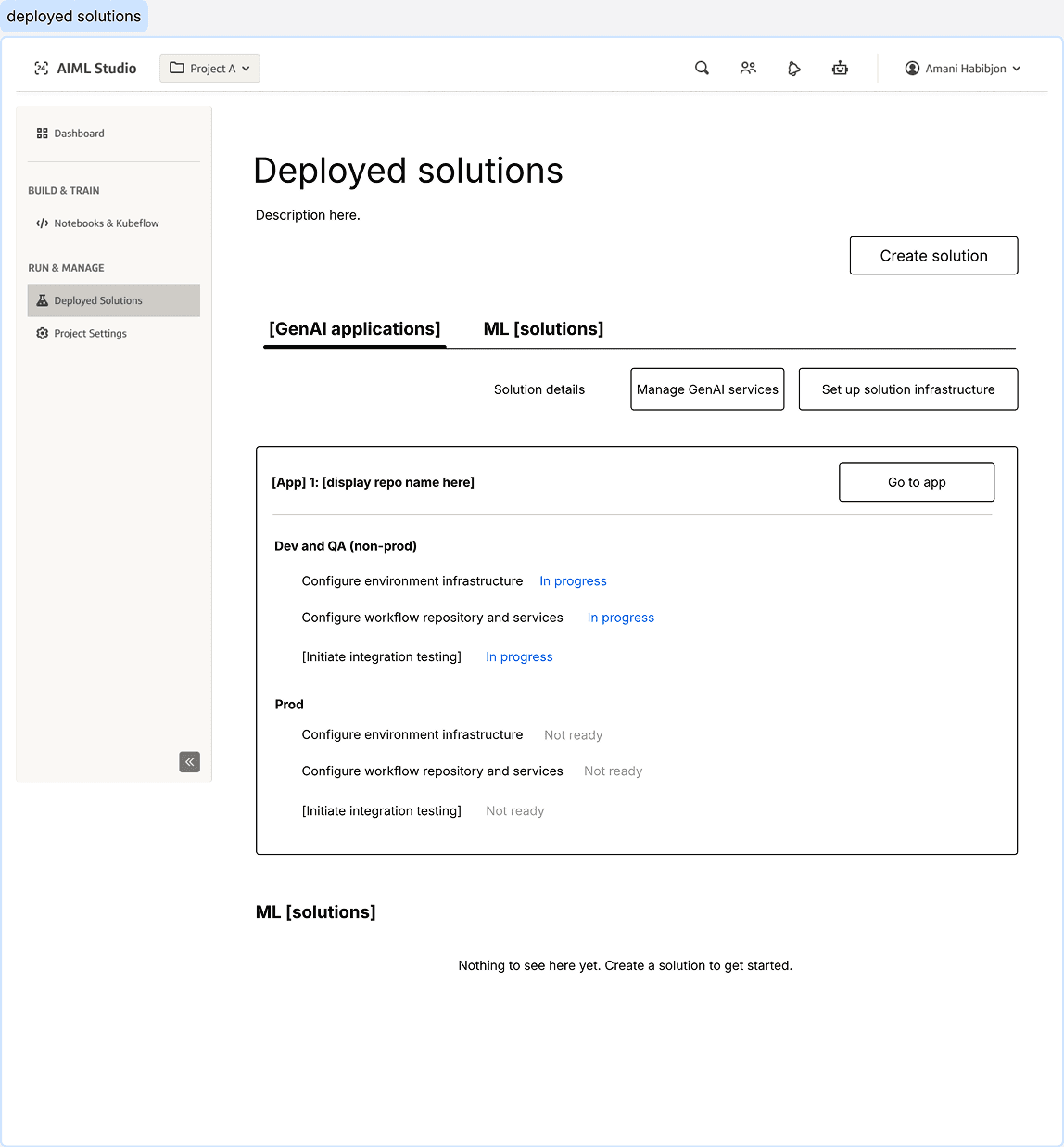
It evolved into a simple onboarding wizard flow leading directly into a guided hub and spoke checklist to simplify onboarding to production.

↓


initial setup wizard

hub and spoke onboarding tasks
Solution
Early design concepts emphasized open choice and freedom to complete onboarding requirements.
Later concepts emphasized guidance and minimizing user error with more guardrails.

Early lo-fi, exploratory concept

Hi-fi design: Experience homepage

Hi-fi design: Initial setup wizard

Hi-fi design: Hub and spoke onboarding checklist
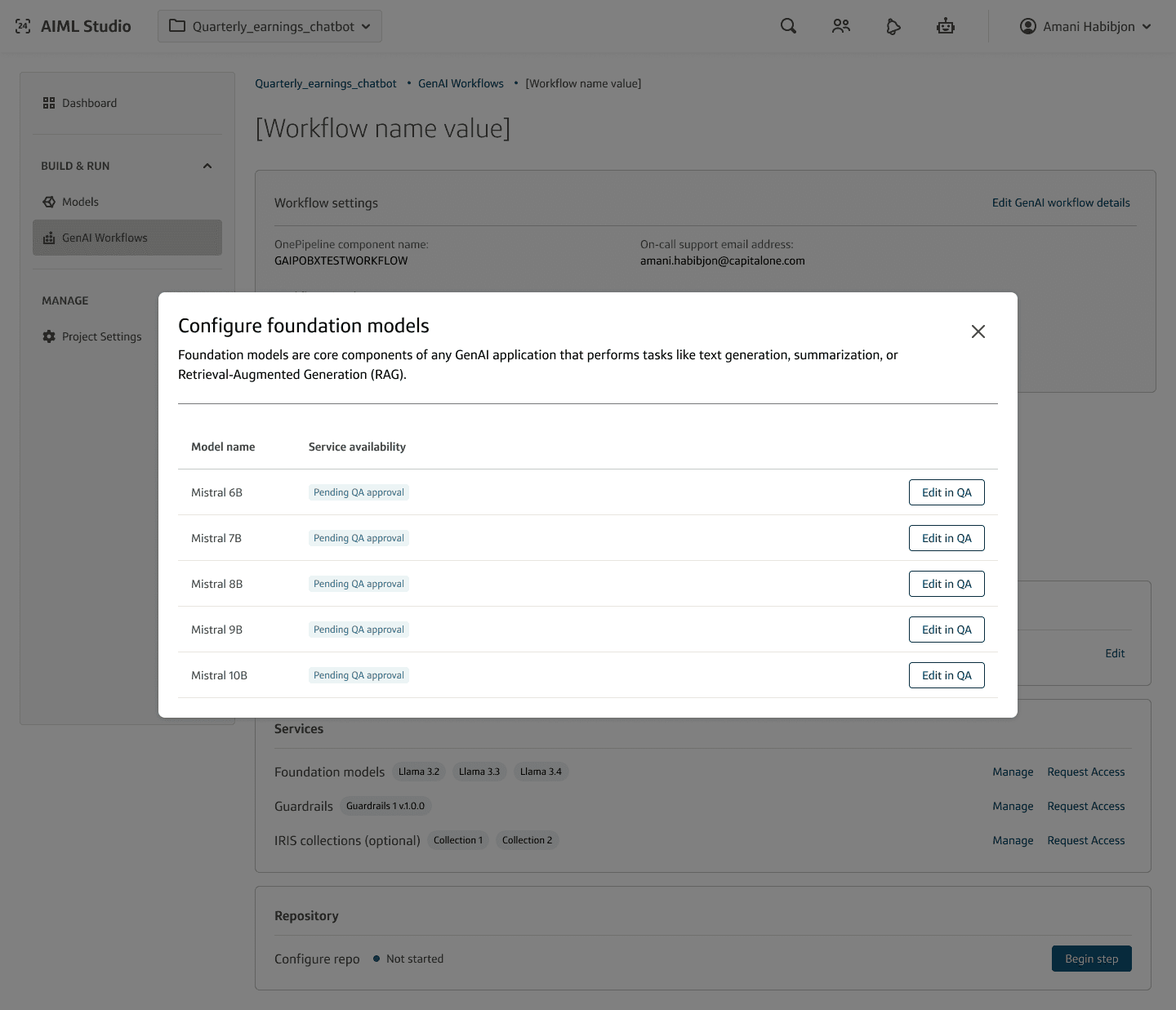
Hi-fi design: Service configuration modal
Research
Approach and objective: Mid-project design reviews and validation research helped evaluate onboarding logic and ease-of-use for the end-to-end flow.
Participants surfaced a few high-impact improvements:
Smart field auto-fill to reduce manual entry across multiple forms
Prerequisite checklist to set expectations before users even started
Estimated times to complete each step in the process
Next steps:
Designs were validated. Updates from research findings were prioritized by product and then implemented by technical UI team.
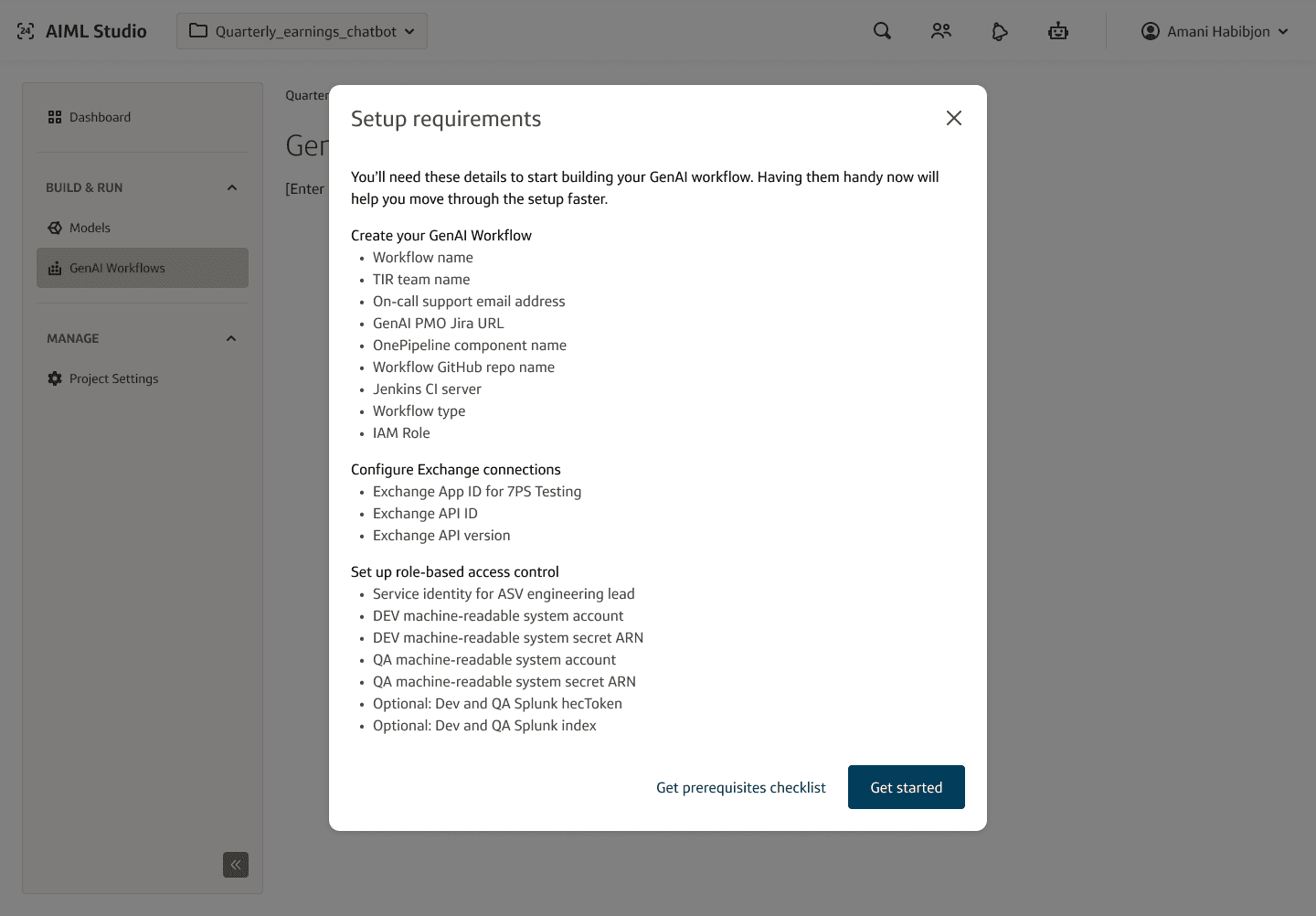
Hi-fi design: Prerequisite checklist

Hi-fi design: Field validations and helper text to increase ease-of-use
Impact
For first launch in 2025, time to production dropped from 63 to 28 days (-57%).
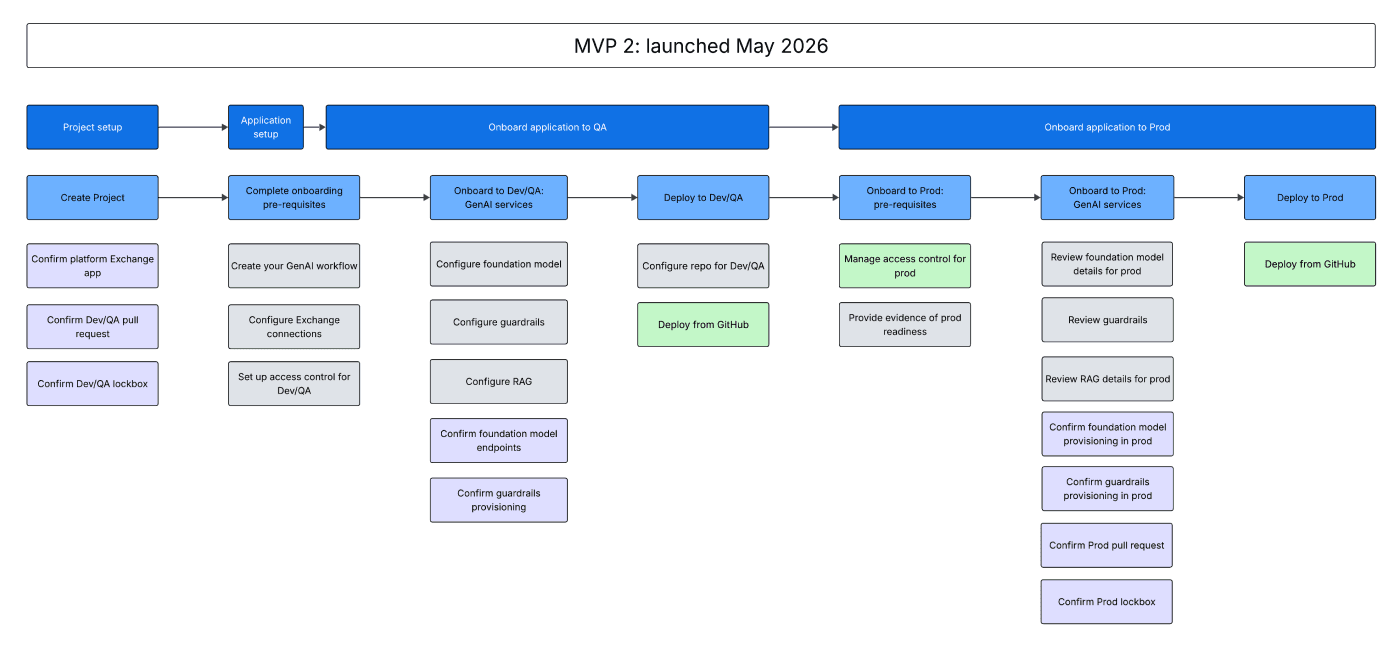
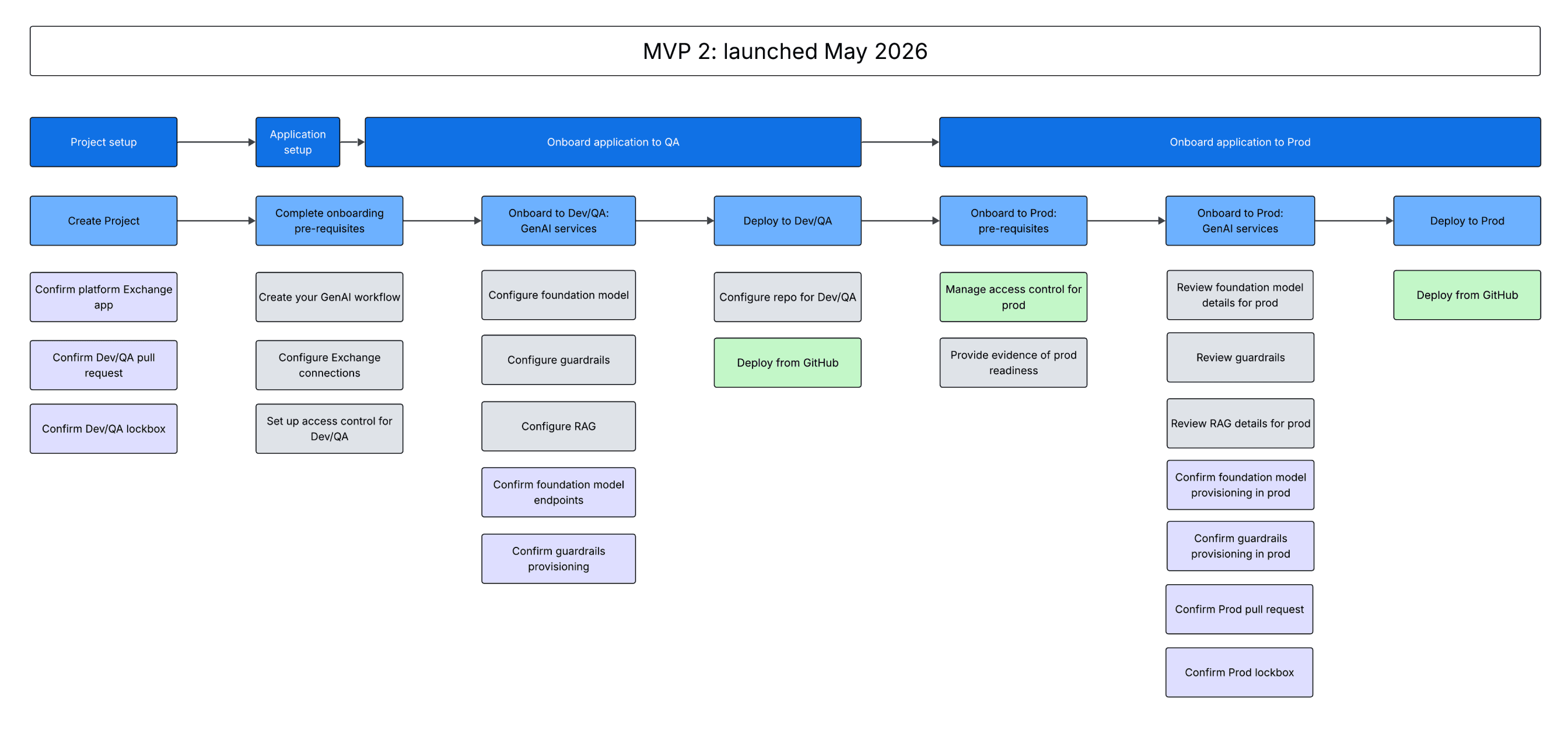
A second iteration launched in May 2026
to target an even more streamlined process
to support the growing number of AI-powered initiatives at
Capital One.
Time to production
63
28
Q4 2025
Q1 2025
Capital One
Streamlining complex onboarding
Speeding up time to production for AI-powered applications
Role: One of two designers; researcher
Date: Q4 2025 and Q1 2026
-57%
time required to onboard to production post-launch
What kind of onboarding?
At Capital One, developers build AI-powered financial applications, like chatbots, on an internal developer platform called AIML Studio, used everyday by engineers and data scientists.
Deploying an application requires onboarding to Capital One-specific GenAI services and approval gates to ensure governance, quality, and predictability. That process naturally introduces complexity.

Problem
Developers were spending months getting AI-powered applications into production.
The product team identified a clear signal that onboarding was broken. This was blocking team timelines and slowing down AI initiatives across the company.

60+ steps spread across multiple platforms

heavy reliance on engineering support teams instead of self-service
Process
The solution started as a complex, multi-tab 'garden glove' document with no progress tracking, visibility of completed steps, and long, hard-to-follow instructions.
It evolved into a simple onboarding wizard flow leading directly into a guided hub and spoke checklist to simplify onboarding to production.


Initial setup

Task list
Solution
Early design concepts emphasized open choice and freedom to complete onboarding requirements. Later concepts emphasized guidance and minimizing user error with more guardrails.
Early lo-fi, exploratory concept
Experience homepage

Onboarding checklist

Hi-fi design: Initial setup wizard

Hi-fi design: Service configuration modal
Research
Approach and objective:
Mid-project design reviews and validation research helped evaluate onboarding logic and ease-of-use for the end-to-end flow.
Participants surfaced a few high-impact improvements:
• Smart field auto-fill to reduce manual entry across multiple forms
• Prerequisite checklist to set expectations before users even started
• Estimated times to complete each step in the process
Next steps:
Designs were validated. Updates from research findings were prioritized by product and then implemented by technical UI team.
Hi-fi design: Prerequisite checklist
Field validations & helper text
Impact
For first launch in 2025, time to production dropped from 63 to 28 days (-57%).
A second iteration launched in May 2026 to target an even more streamlined process to support the growing number of AI-powered initiatives at Capital One.

Q4 2025
63
28
Q1 2025
Time to production
Capital One
Streamlining complex onboarding
Speeding up time to production for AI-powered applications
Role: Role: One of two designers; researcher
Date: Date: Q4 2025 and Q1 2026
-57%
time required to onboard to production post-launch
What kind of onboarding?
At Capital One, developers build AI-powered financial applications, like chatbots, on an internal developer platform called AIML Studio, used everyday by engineers and data scientists.
Deploying an application requires onboarding to Capital One-specific GenAI services and approval gates to ensure governance, quality, and predictability. That process naturally introduces complexity.

Problem
Developers were spending months getting AI-powered applications into production. The product team identified a clear signal that onboarding was broken.
This was blocking team timelines and slowing down AI initiatives across the company.

60+ steps spread across multiple platforms

heavy reliance on engineering support teams instead of self-service

no visibility into onboarding progress
Process
The solution started as a complex, multi-tab garden glove document with no progress tracking, visibility of completed steps, and long, hard-to-follow instructions.
It evolved into a simple onboarding wizard flow leading directly into a guided hub and spoke checklist to simplify onboarding to production.

initial setup wizard
hub and spoke onboarding tasks
Solution
Early design concepts emphasized open choice and freedom to complete onboarding requirements. Later concepts emphasized guidance and minimizing user error with more guardrails.
Early lo-fi, exploratory concept

Hi-fi design: Experience homepage

Hi-fi design: Initial setup wizard
Hi-fi design: Hub and spoke onboarding checklist
Hi-fi design: Service configuration modal
Research
Approach and objective: Mid-project design reviews and validation research helped evaluate onboarding logic and ease-of-use for the end-to-end flow.
Participants surfaced a few high-impact improvements:
• Smart field auto-fill to reduce manual entry across multiple forms
• Prerequisite checklist to set expectations before users even started
• Estimated times to complete each step in the process
Next steps: Designs were validated. Updates from research findings were prioritized by product and then implemented by technical UI team.
Hi-fi design: Prerequisite checklist
Hi-fi design: Field validations and helper text to increase ease-of-use
Impact
For first launch in 2025, time to production dropped from 63 to 28 days (-57%).
A second iteration launched in May 2026 to target an even more streamlined process to support the growing number of AI-powered initiatives at Capital One.
Q4 2025
63
28
Q1 2025
Time to production